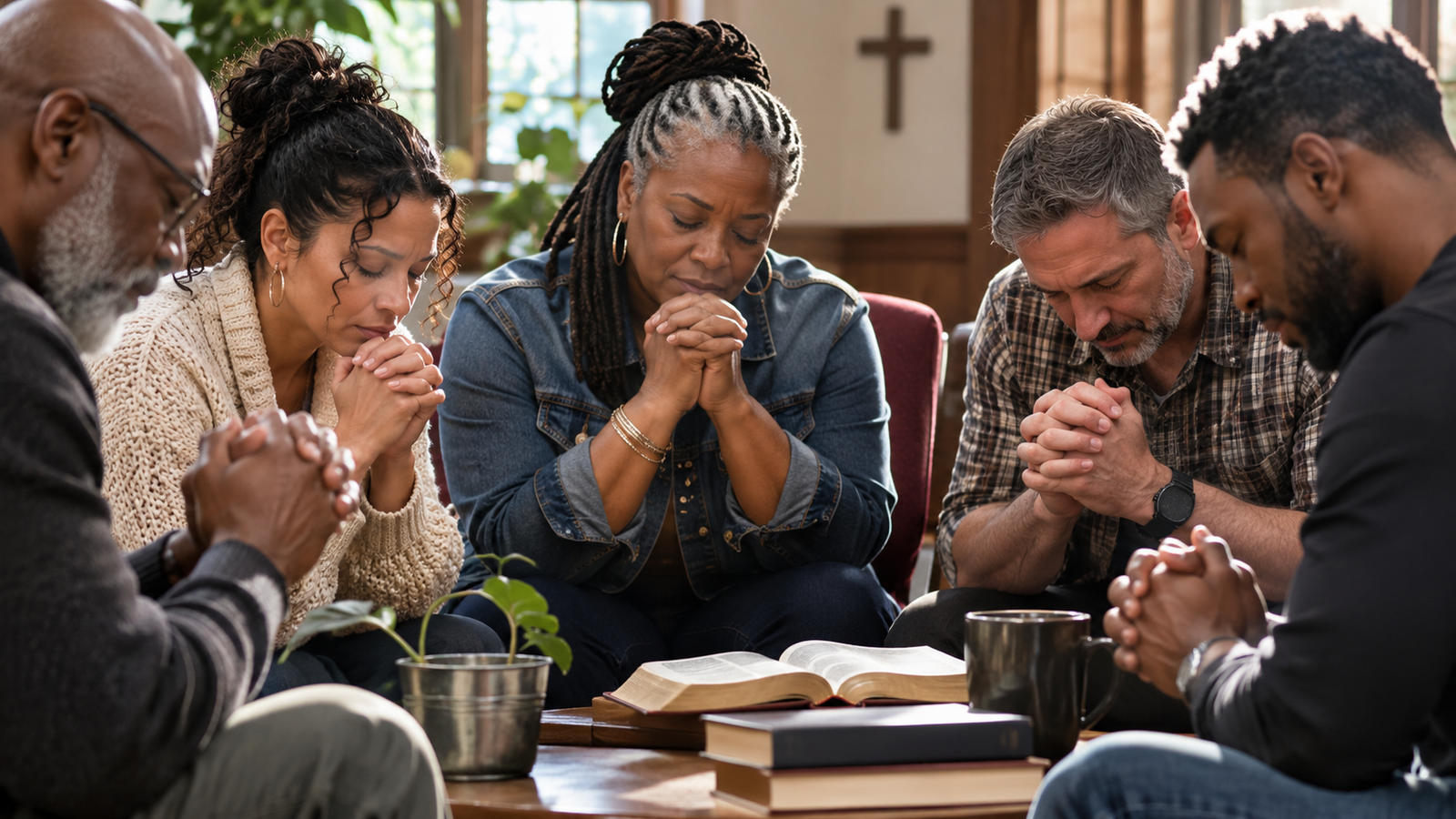
Tag: Prayer

  • 2 Chronicles 7:14 Explained: Humility, Prayer, and God’s Promise of Healing

    2 Chronicles 7:14 Explained: Humility, Prayer, and God’s Promise of Healing

    What does it mean to humble ourselves, pray, seek God’s face, and turn from our wicked ways?

    There are times when life seems to be moving in the wrong direction. Relationships become strained. Communities become divided. People lose their sense of purpose, and the problems around them can begin to feel overwhelming.

    In moments like these, we often look for solutions outside ourselves. We want circumstances to change, leaders to act, and problems to disappear.

    But what if meaningful change begins with something much closer to home?

    In 2 Chronicles 7:14, God calls His people to examine their own hearts before expecting their circumstances to change.

    The verse offers a powerful message about humility, prayer, repentance, forgiveness, and restoration.

    What Does 2 Chronicles 7:14 Say?

    “if my people who are called by my name humble themselves, and pray and seek my face and turn from their wicked ways, then I will hear from heaven and will forgive their sin and heal their land.”

    — 2 Chronicles 7:14

    This passage presents four responses God calls His people to make: humble themselves, pray, seek His face, and turn from their wicked ways.

    It also contains a promise: God will hear, forgive, and heal.

    To understand that promise properly, we first need to understand the circumstances in which it was given.

    Understanding the Biblical Context of 2 Chronicles 7:14

    Second Chronicles records important events in the history of Israel, including the reign of King Solomon and the construction of the temple in Jerusalem.

    After the temple was completed, Solomon offered a prayer of dedication. He acknowledged that the people would sometimes sin, suffer hardship, and need God’s forgiveness.

    In 2 Chronicles 7, God appeared to Solomon and responded to that prayer.

    The surrounding passage describes circumstances such as drought, locusts, and pestilence. These were serious threats to an agricultural society whose survival depended on the land.

    God’s words in verse 14 were originally addressed to Israel, His covenant people, in connection with the temple and the land He had given them.

    This historical setting matters.

    The verse was not originally written as a blanket promise that every modern nation will experience political, economic, or environmental recovery whenever people pray.

    Instead, it reveals something enduring about God’s relationship with His people: He calls them to humility, sincere prayer, repentance, and renewed faithfulness.

    These principles remain deeply meaningful for Christians today.

    “If My People Who Are Called by My Name”

    The verse begins by identifying the people being addressed.

    God says, “my people.”

    This is a call to those who already belong to Him.

    Rather than beginning with accusations against outsiders, the passage directs attention toward the spiritual condition of God’s own people.

    That distinction is important.

    It is often easier to recognize what is wrong with the world than to acknowledge what needs to change within ourselves.

    We may criticize dishonesty while overlooking our own small compromises. We may complain about division while refusing to reconcile with someone. We may ask God to correct others while resisting His correction in our own lives.

    The opening words of 2 Chronicles 7:14 invite a different approach.

    Before asking what everyone else needs to change, we should be willing to ask what God may be calling us to change.

    “Humble Themselves”: Why Humility Comes First

    Humility is the first response God calls for in this verse.

    To humble ourselves means recognizing that we are not always right, that we do not have every answer, and that we need God’s wisdom and guidance.

    Humility does not mean believing we are worthless.

    It means being honest about our limitations.

    Pride makes it difficult to admit mistakes. It encourages us to defend our decisions, justify our behavior, and blame others for our problems.

    Humility creates room for correction.

    Consider a relationship in which both people believe the other person is entirely responsible for a disagreement.

    As long as neither is willing to acknowledge a personal contribution to the problem, reconciliation becomes difficult.

    But when someone says, “I can see where I was wrong,” the conversation can begin to change.

    The same principle applies to our spiritual lives.

    Humility opens our hearts to the possibility that God may be asking us to think differently, behave differently, or reconsider the direction we are taking.

    Spiritual renewal begins with a willingness to be corrected.

    “And Pray”: Turning Toward God

    Prayer is the second response.

    Prayer is more than asking God to provide something we want.

    It is an expression of dependence, trust, and relationship.

    When we pray, we acknowledge that our own understanding and abilities are not sufficient for every challenge we face.

    We bring our fears, concerns, gratitude, questions, and hopes before God.

    But prayer also requires sincerity.

    It is possible to ask God to change our circumstances while remaining unwilling to change our behavior.

    For example, someone might pray for peace in their family while continuing to speak harshly to the people they love.

    Another person might pray for wisdom while refusing to consider advice that challenges their existing beliefs.

    The prayer described in 2 Chronicles 7:14 is connected to humility and repentance.

    It is not simply a request for relief.

    It is part of a genuine turning toward God.

    “Seek My Face”: Pursuing a Relationship With God

    The third instruction is to seek God’s face.

    This expression goes beyond asking God for help with a particular problem.

    It describes the desire to know Him, draw near to Him, and live in His presence.

    There is an important difference between seeking what someone can give us and seeking a relationship with that person.

    Imagine a friendship in which one person only calls when they need a favor.

    Over time, that relationship may begin to feel one-sided.

    A meaningful relationship involves more than requests. It includes attention, understanding, appreciation, and genuine connection.

    Seeking God’s face reflects that deeper kind of relationship.

    It means wanting to understand His character, His wisdom, and His will.

    For Christians, this can include reading Scripture, praying regularly, worshiping, reflecting on God’s teachings, and making decisions that reflect those teachings.

    The goal is not simply to receive blessings.

    The goal is to draw closer to the One who gives them.

    “Turn From Their Wicked Ways”: Repentance Requires Action

    The fourth instruction is perhaps the most challenging.

    God calls His people to turn from their wicked ways.

    This is the language of repentance.

    Repentance involves recognizing wrongdoing and changing direction.

    It is more than feeling guilty. It is more than saying we are sorry. It is more than promising that we will do better someday.

    True repentance calls for a response.

    If someone recognizes that dishonesty is damaging their relationships, repentance means beginning to practice honesty.

    If someone recognizes that resentment is consuming their thoughts, repentance may involve taking steps toward forgiveness.

    If someone recognizes that selfishness is influencing their decisions, repentance means learning to consider the needs of others.

    These changes may not happen perfectly or immediately.

    But repentance establishes a new direction.

    A person cannot continue deliberately walking down the same road while claiming to have turned around.

    That is why this part of the verse matters so much.

    Prayer without a willingness to change can become an attempt to receive God’s help without accepting His guidance.

    Second Chronicles 7:14 brings prayer and changed behavior together.

    “Then I Will Hear From Heaven”

    After describing the response He requires, God makes a promise.

    He will hear from heaven.

    Within the original covenant setting, this was God’s assurance to Israel that He would respond when His people returned to Him as instructed.

    The words communicate that God is not indifferent to sincere repentance.

    He is attentive to those who seek Him.

    For believers today, this offers encouragement to approach God with honesty rather than pretending to have everything together.

    We do not need to hide our failures behind appearances.

    We can acknowledge where we have gone wrong and seek His mercy.

    The promise begins with the reassurance that God hears.

    “Will Forgive Their Sin”: The Importance of Forgiveness

    The next part of the promise concerns forgiveness.

    Sin damages our relationship with God and can also harm our relationships with other people.

    It may involve choices we regret, responsibilities we neglect, or attitudes that lead us away from what is right.

    Forgiveness addresses the need for reconciliation.

    But forgiveness should not be confused with pretending that wrongdoing never occurred.

    Acknowledging sin is part of the process.

    When we recognize our mistakes, we become better able to take responsibility for them and pursue a different way of living.

    For Christians, forgiveness is central to the message of the gospel and the work of Jesus Christ.

    Second Chronicles 7:14 reminds us that repentance and forgiveness are deeply connected in God’s dealings with His people.

    “And Heal Their Land”: What Does God’s Promise Mean?

    The final promise is that God will heal their land.

    In its original context, this referred to Israel and the hardships described in the surrounding verses.

    The land was central to Israel’s life, livelihood, and covenant relationship with God.

    Its restoration was therefore a significant part of God’s promise to His people.

    Today, Christians sometimes apply this verse to prayers for their countries, communities, churches, and families.

    Praying for healing and restoration is certainly meaningful.

    However, we should be careful not to treat this passage as a guarantee that a particular nation will prosper simply because people quote the verse or organize a prayer gathering.

    The original promise belongs to a specific historical and covenant setting.

    Its broader spiritual lessons are still valuable.

    It reminds us that restoration is connected to humility, repentance, and a renewed relationship with God.

    It also challenges us to consider how our own behavior contributes to the well-being of the people and communities around us.

    A community cannot become more honest if its members refuse to practice honesty.

    Relationships cannot become healthier if people refuse to acknowledge wrongdoing.

    And reconciliation becomes difficult when everyone demands change from others but rejects personal responsibility.

    Healing often requires people to participate in the very changes they are praying to see.

    How Can We Apply 2 Chronicles 7:14 to Everyday Life?

    Although this verse was originally addressed to Israel, its call to humility, prayer, and repentance offers practical guidance for Christian living.

    Begin With Personal Examination

    Instead of focusing entirely on what others are doing wrong, ask yourself whether there are attitudes or habits in your own life that need attention.

    This is not about accepting blame for everything.

    It is about taking responsibility for what is within your control.

    Make Prayer a Regular Practice

    Do not wait until circumstances become overwhelming before turning to God.

    Develop a consistent habit of prayer that includes gratitude, confession, guidance, and reflection.

    Seek God’s Wisdom, Not Just His Help

    Spend time learning what Scripture teaches about character, relationships, forgiveness, and responsible living.

    Let those teachings influence the decisions you make.

    Be Willing to Change Direction

    When you recognize behavior that conflicts with your faith, take meaningful steps to change it.

    Even small changes can become the beginning of lasting transformation.

    Contribute to Healing Around You

    Look for opportunities to practice reconciliation, kindness, honesty, and service.

    You may not be able to solve every problem in your community, but you can influence how you treat the people within it.

    These actions do not replace prayer.

    They help demonstrate that your prayers are connected to a sincere desire to live differently.

    A Scripture Worth Remembering

    Some Bible verses offer comfort. Others offer direction.

    Second Chronicles 7:14 does both, but it also presents a challenge.

    It reminds us that we cannot always expect meaningful change while refusing to examine our own hearts.

    The verse invites us to approach God with humility, develop a genuine relationship through prayer, and demonstrate repentance through our actions.

    Its message is especially valuable when we feel frustrated by circumstances beyond our control.

    We may not be able to change the entire world.

    But we can begin by allowing God to work within us.

    And sometimes, that is where the most meaningful change begins.

    Keep the Message of 2 Chronicles 7:14 Close

    The call to humility, prayer, repentance, and restoration is worth remembering long after we finish reading the passage.

    Our 2 Chronicles 7:14 engraved Scripture Block presents this meaningful Bible verse on natural wood, creating a lasting reminder of the importance of seeking God with a sincere heart.

    Whether displayed in a home, office, prayer room, or given as a thoughtful Christian gift, it offers a daily invitation to reflect on God’s Word.

    At ScriptureBlocks.store, we believe the most meaningful gifts carry messages that continue speaking long after they are received.

    The wood is the medium. God’s Word is the message.

    Explore our engraved Scripture Blocks and discover meaningful ways to share the gift of God’s Word.


  • What Does 1 Thessalonians 5:16–18 Mean? Rejoice Always, Pray Without Ceasing, and Give Thanks

    What Does 1 Thessalonians 5:16–18 Mean? Rejoice Always, Pray Without Ceasing, and Give Thanks

    What does it mean to rejoice always, pray without ceasing, and give thanks in all circumstances?

    At first glance, these three instructions from the apostle Paul seem simple enough.

    Be joyful. Keep praying. Be thankful.

    But anyone who has experienced disappointment, grief, uncertainty, or loss knows that following these instructions is not always easy.

    How can we rejoice when life is painful? How can we pray without stopping when our days are filled with responsibilities? And how can we give thanks when our circumstances seem to offer very little to be thankful for?

    The answer begins with understanding what Paul was actually teaching.

    In 1 Thessalonians 5:16–18, we discover something more meaningful than a command to maintain a positive attitude. We discover a way of approaching life that keeps our hearts connected to God, regardless of what happens around us.

    What Does 1 Thessalonians 5:16–18 Actually Say?

    The passage reads:

    16 Rejoice always,

    17 pray without ceasing,

    18 give thanks in all circumstances; for this is the will of God in Christ Jesus for you.

    These three short verses contain three distinct instructions.

    Rejoice always. Develop a joy that is rooted in your relationship with God rather than dependent entirely upon your circumstances.

    Pray without ceasing. Maintain an ongoing relationship with God through regular communication, dependence, and trust.

    Give thanks in all circumstances. Practice gratitude even when life is difficult, recognizing that God’s presence and goodness are not limited to comfortable seasons.

    Together, these instructions describe a spiritual posture: a consistent way of responding to life through faith.

    Paul was not teaching believers to ignore reality.

    He was teaching them how to remain connected to God while living within it.

    Understanding the Biblical Context of 1 Thessalonians 5

    The apostle Paul wrote his first letter to the Thessalonians to encourage a relatively young Christian community.

    These believers were learning how to follow Jesus while facing pressure and opposition.

    Their faith did not remove the difficulties of everyday life.

    In fact, their commitment to Christ sometimes made those difficulties more pronounced.

    Throughout the letter, Paul encourages them to remain faithful, love one another, live responsibly, and hold firmly to their hope in Christ.

    Near the end of the letter, he offers a series of brief instructions about how believers should live together and conduct themselves.

    Among those instructions are the three commands found in verses 16 through 18.

    They are not isolated motivational sayings.

    They are part of Paul’s practical guidance for a community learning to live faithfully in an imperfect world.

    That context matters.

    Paul was not addressing people whose lives were free from trouble. He was encouraging believers who needed strength, perseverance, and spiritual stability.

    What Does “Rejoice Always” Mean?

    The first instruction is only two words:

    Rejoice always.

    It is easy to confuse joy with happiness.

    Happiness often reflects how we feel about our current circumstances.

    We feel happy when something good happens, when a problem is resolved, or when life unfolds according to our expectations.

    Joy, as Paul describes it, reaches deeper.

    Christian joy is rooted in our relationship with God and the hope we have through Jesus Christ.

    That means joy can exist even when circumstances are difficult.

    A person can experience grief while still holding onto hope.

    Someone can feel disappointed while remaining grateful for God’s presence.

    A believer can acknowledge genuine pain without surrendering the conviction that life still has meaning and purpose.

    Rejoicing always does not mean smiling through every hardship.

    It means refusing to let hardship become the only truth we recognize.

    Joy Is Not the Denial of Suffering

    One of the most important distinctions in this passage is that joy and sorrow are not necessarily opposites.

    The Bible contains numerous examples of faithful people who experienced fear, grief, frustration, and uncertainty.

    Even Jesus wept.

    Paul himself experienced persecution, imprisonment, and suffering.

    Yet he continued to encourage believers to rejoice.

    Why?

    Because Christian joy does not require us to pretend that everything is good.

    It invites us to remember that God’s goodness remains meaningful even when everything around us is not.

    Joy is not the absence of difficulty. It is the presence of hope within difficulty.

    What Does “Pray Without Ceasing” Mean?

    The second instruction raises an interesting question.

    How can anyone pray without stopping?

    We have jobs to perform, families to care for, responsibilities to manage, and countless ordinary tasks that require our attention.

    Surely Paul was not suggesting that believers must spend every waking moment speaking prayers aloud.

    Instead, the instruction points toward a continuing relationship with God.

    Prayer is more than a scheduled activity.

    It is a way of remaining spiritually connected throughout the day.

    We can pray when facing a difficult decision.

    We can offer a brief expression of gratitude when something goes well.

    We can ask for patience during a frustrating conversation.

    We can seek wisdom before responding to a problem.

    And we can turn to God quietly when words seem difficult to find.

    Prayer as an Ongoing Conversation

    Think about the difference between someone you speak with only occasionally and someone who is a regular part of your life.

    A close relationship is not sustained by a single conversation.

    It develops through repeated communication, trust, and shared experiences.

    Our relationship with God also grows through consistent communication.

    Praying without ceasing means making prayer a continuing part of our lives rather than reserving it exclusively for emergencies.

    It does not require constant speech.

    It requires a heart that remains open to God.

    Prayer becomes a way of living, not merely something we stop living to do.

    What Does “Give Thanks in All Circumstances” Mean?

    The third instruction may be the most challenging.

    Give thanks in all circumstances.

    Notice what Paul does not say.

    He does not tell believers that every circumstance is good.

    He does not suggest that suffering, injustice, grief, or loss should be celebrated.

    He instructs believers to practice gratitude in all circumstances.

    That distinction is important.

    Being thankful in a difficult situation is not the same as being thankful that the difficulty occurred.

    A person experiencing illness may be grateful for the care of loved ones.

    Someone facing financial hardship may still appreciate the support of friends or the opportunity to begin again.

    A grieving person may remain thankful for meaningful memories and relationships.

    Gratitude does not erase pain.

    It allows us to recognize that pain is not necessarily the only thing present in our lives.

    Gratitude Changes What We Notice

    Our attention naturally moves toward whatever feels most urgent.

    When something goes wrong, it can become difficult to see anything else.

    A single disappointment may overshadow numerous blessings.

    One unresolved problem can dominate our thoughts for an entire day.

    Gratitude invites us to widen our perspective.

    It encourages us to recognize what remains good, meaningful, and worthy of appreciation.

    This does not mean overlooking problems that require action.

    It means refusing to allow those problems to define our entire experience.

    Gratitude does not require perfect circumstances. It requires a willingness to recognize God’s goodness within imperfect circumstances.

    Why Are Joy, Prayer, and Gratitude Connected?

    Paul presents these three instructions together for a reason.

    They reinforce one another.

    Joy reminds us that our hope extends beyond our immediate circumstances.

    Prayer keeps us connected to the source of that hope.

    Gratitude helps us recognize God’s goodness as we move through everyday life.

    Consider how this relationship works.

    When we become discouraged, prayer gives us a place to bring our concerns.

    As we pray, we may begin to recognize blessings that our worries had overshadowed.

    Recognizing those blessings encourages gratitude.

    And gratitude can strengthen our ability to experience joy.

    The process is not always immediate.

    Sometimes our circumstances remain unchanged.

    But our relationship with those circumstances can begin to change.

    Instead of being completely consumed by what is wrong, we learn to recognize what is still meaningful.

    Instead of carrying every burden alone, we bring our concerns before God.

    Instead of waiting for life to become perfect before experiencing joy, we learn to cultivate hope in the present.

    Together, these practices create a foundation for spiritual steadiness.

    What Does “This Is the Will of God” Mean?

    The passage concludes with an important statement:

    “For this is the will of God in Christ Jesus for you.”

    Many believers spend considerable time wondering about God’s will.

    What career should I pursue?

    Where should I live?

    Which opportunity should I accept?

    What direction should my life take?

    These are meaningful questions.

    But 1 Thessalonians 5:16–18 reminds us that God’s will also concerns the way we live each day.

    Before we know every detail about our future, we can begin practicing joy, prayer, and gratitude.

    We may not know exactly what tomorrow will bring.

    But we can choose to remain connected to God today.

    We may not understand why a particular difficulty has entered our lives.

    But we can continue praying for wisdom and strength.

    We may not possess everything we desire.

    But we can recognize and appreciate what we have already received.

    The passage teaches us that following God’s will is not exclusively about discovering our destination.

    It is also about developing the character and spiritual habits that guide us along the way.

    How Can We Apply 1 Thessalonians 5:16–18 Every Day?

    The beauty of this passage is its simplicity.

    We do not need special circumstances to begin practicing its principles.

    1. Begin the Day With Gratitude

    Before focusing on everything you need to accomplish, identify something for which you are thankful.

    It may be your health, your family, an opportunity, or simply the gift of another day.

    This small practice can help establish a more thoughtful beginning.

    2. Make Prayer Part of Ordinary Moments

    You do not have to wait until you are alone or in a formal setting.

    Pray before making decisions.

    Pray when you need patience.

    Pray when you feel overwhelmed.

    Pray when something good happens.

    Allow communication with God to become a natural part of your daily rhythm.

    3. Look for Reasons to Rejoice

    Not every day will feel joyful.

    But even difficult days may contain moments of kindness, beauty, connection, or encouragement.

    Learning to recognize those moments can strengthen your sense of hope.

    4. Acknowledge Difficult Feelings Without Surrendering to Them

    Faith does not require you to deny disappointment or sadness.

    You can acknowledge those feelings honestly while continuing to seek God’s comfort and guidance.

    Sometimes the most faithful prayer is simply an honest expression of what you are experiencing.

    5. End the Day With Reflection

    Before going to sleep, consider three questions:

    • What gave me a reason to rejoice today?
    • When did I turn to God in prayer?
    • What can I thank God for, even if today was difficult?

    These questions can turn a familiar Bible passage into a practical daily habit.

    A Meaningful Scripture for Encouragement and Christian Gifts

    Some Bible verses are especially powerful because they are easy to remember and meaningful enough to revisit throughout life.

    1 Thessalonians 5:16–18 is one of those passages.

    Its message is appropriate for moments of celebration, but it can be even more valuable during seasons of uncertainty.

    It reminds us that joy is worth cultivating, prayer is worth maintaining, and gratitude is worth practicing.

    At ScriptureBlocks.store, we believe God’s Word deserves a meaningful place in everyday life.

    Our engraved wooden Scripture Blocks preserve passages like 1 Thessalonians 5:16–18 as lasting reminders of faith, hope, and encouragement.

    Displayed in a home, office, or personal space, this Scripture can offer a gentle invitation to pause, pray, and recognize the blessings that might otherwise go unnoticed.

    It can also make a thoughtful Christian gift for someone beginning a new chapter, facing a difficult season, or simply seeking to deepen their daily relationship with God.

    Because sometimes the most meaningful gift is not something that changes a person’s circumstances.

    It is a reminder that helps them face those circumstances with renewed faith.

    The wood is the medium. God’s Word is the message.

    Final Reflection: A Life of Joy, Prayer, and Gratitude

    What does 1 Thessalonians 5:16–18 mean?

    It teaches us to cultivate a relationship with God that remains active through every season of life.

    To rejoice always is to hold onto hope even when circumstances are difficult.

    To pray without ceasing is to maintain an ongoing connection with God.

    To give thanks in all circumstances is to recognize that blessings can still be found even when life is imperfect.

    These are not instructions to pretend that everything is wonderful.

    They are invitations to develop a deeper and more enduring faith.

    We cannot always choose what happens around us.

    But we can continue learning how to respond with prayer, gratitude, and hope.

    And perhaps that is one of the most important lessons of this passage:

    A life of faith is not built only in extraordinary moments. It is strengthened through the ordinary choices we make every day.